
Layered Scones
Scones are wonderfully flexible treats: good for soaking up tea or coffee, willing to be split open and spread with generous amounts of butter, honey, jam, and-or clotted cream mmh . . . , and come in any variety imaginable, from blueberry to apple-cheddar—a veritable breakfast champion! The typical coffee-house scone, however, tends to possess the absorptive properties of a parched sponge, and the structural integrity to defy the crumb cake. This post’s “layered scones” are not so keen on depriving your mouth of moisture as they are to have you craving their rich softness on a crisp winter morning!
Barista, “Yes, m’am, that will be $2.50—and management requires that we give you this glass of water.”
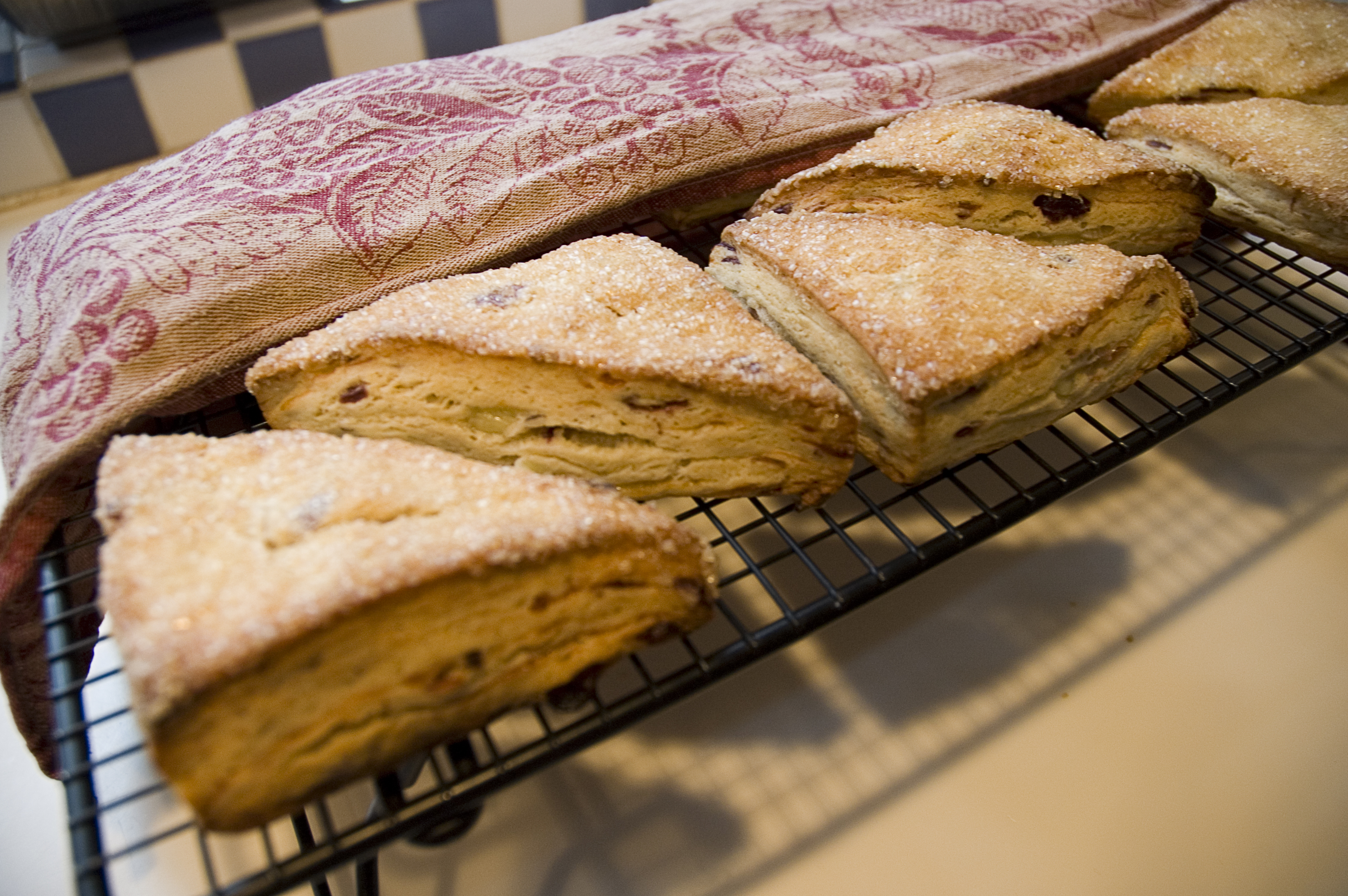
Recipes included:
- basic layered scone
- camembert and cherry-créme-fraîche scone
- cherry créme fraîche
Before getting to the recipes, we have included our tutorial on how to fold dough—an essential skill for anyone who aspires to pastry!
Lesson: Folding dough into layers
With an ephemeral outer crust, and supple, sweet-and-savory interior—few pastries so readily induce salivation as the croissant. What makes the croissant, puff pastry, or phyllo dough so enjoyable? Simply put—layers. Layers are formed by repeatedly folding dough, often (as with croissants and puff pastry) with a pat of butter layered between. The result is a pastry heralded for its lightness, irresistible, buttery flavor, and ability to rise without leavening. While this post is not about croissants (it’s in the works), we will nonetheless be applying similar techniques. The result: the comforting dull ‘snap’ of a traditional scone, but with a near melt-in-your-mouth crumb that is sure to have you reminiscing while you clean your breakfast-ware.
Technique summary:
We will be rolling the dough out into a rough-rectangle and then folding it—much like one folds a letter. The dough is then rotated 90º and rolled-out to about the same rough-rectangle we had in the beginning. This is considered 1 turn. The process is complete when we have given the dough 5-6 turns, i.e., when we have repeated the steps of folding, rotating, and rolling-out 5-6 times. Use flour when necessary to keep the dough from sticking, and refrigerate for 15-20 minutes if the dough becomes too soft to hold together.
Step-by-step instructions:
-Flour work-surface and roll-out dough into a 1/2-inch-high rectangle (anywhere from 1/2 inch to 1 inch will work—roll to whatever thickness you find makes folding easiest)
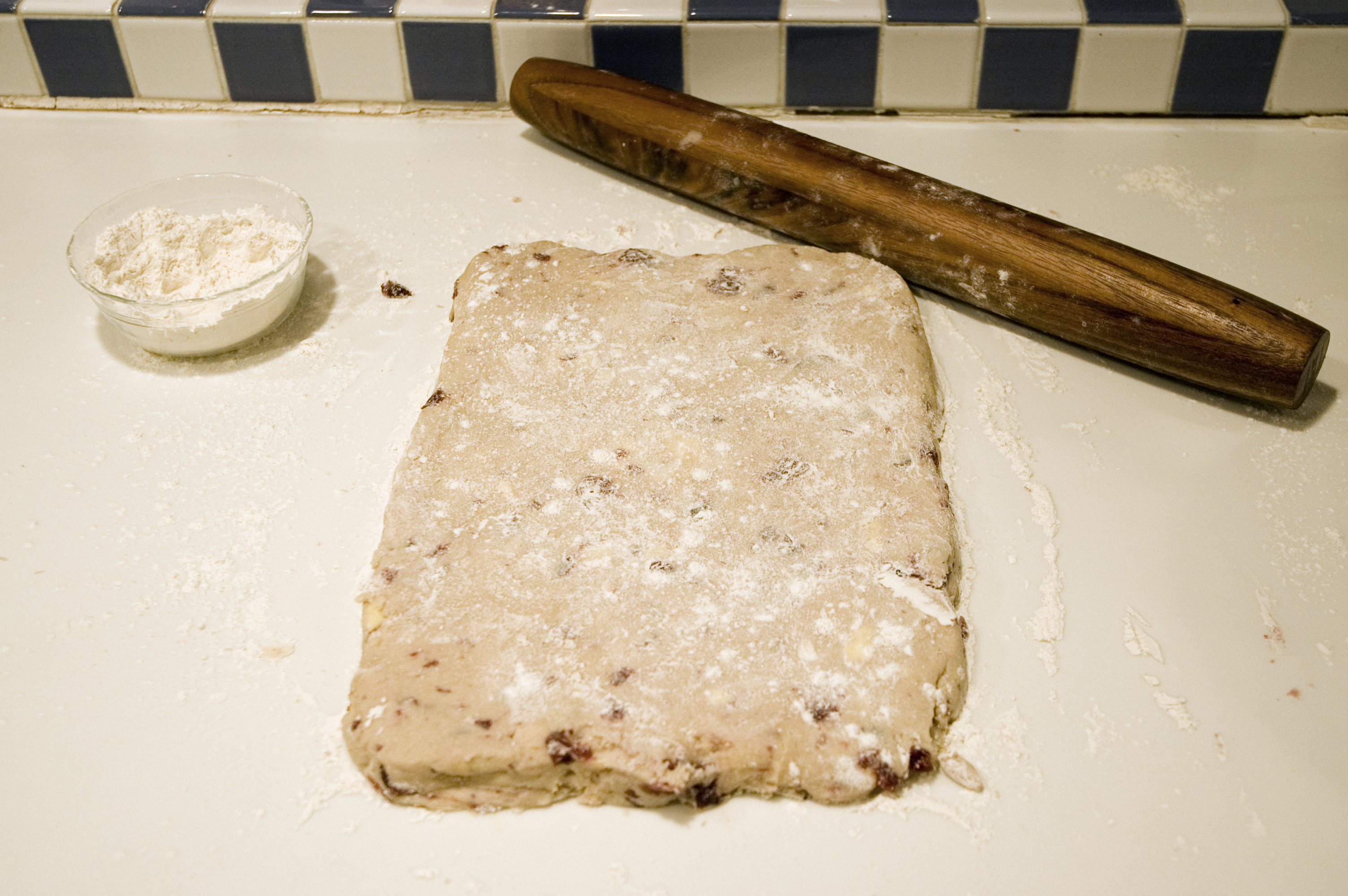
“rectangle”
-Fold dough into thirds or fourths (folding into fourths will create the same number of layers with fewer turns. The only downside is that the extra fold may cause the dough to tear. If this happens, stop, refrigerate for 15-20 minutes, and then proceed with the folding.)
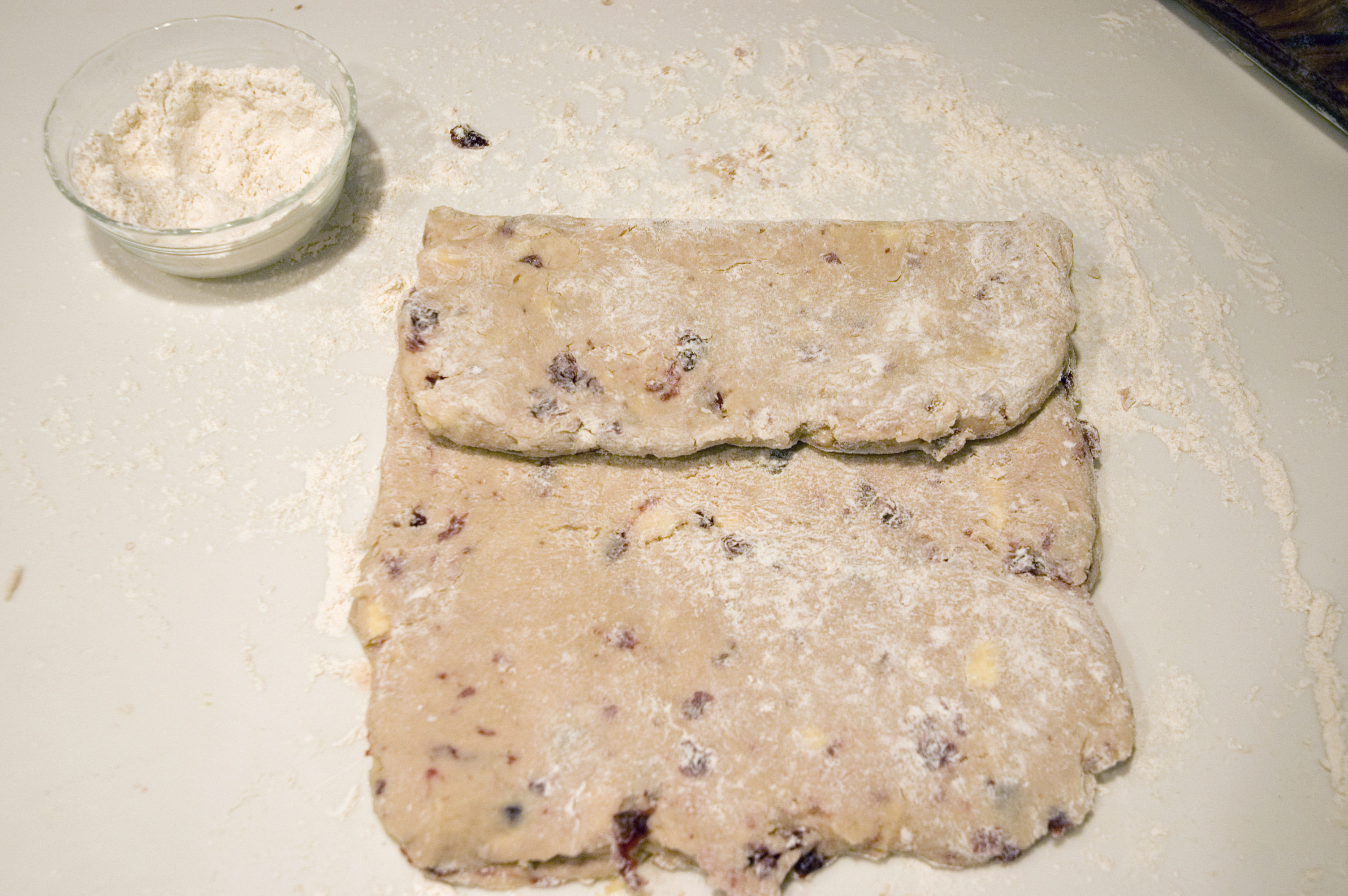
Keep going. . . (note the yellow flakes of butter in the dough)
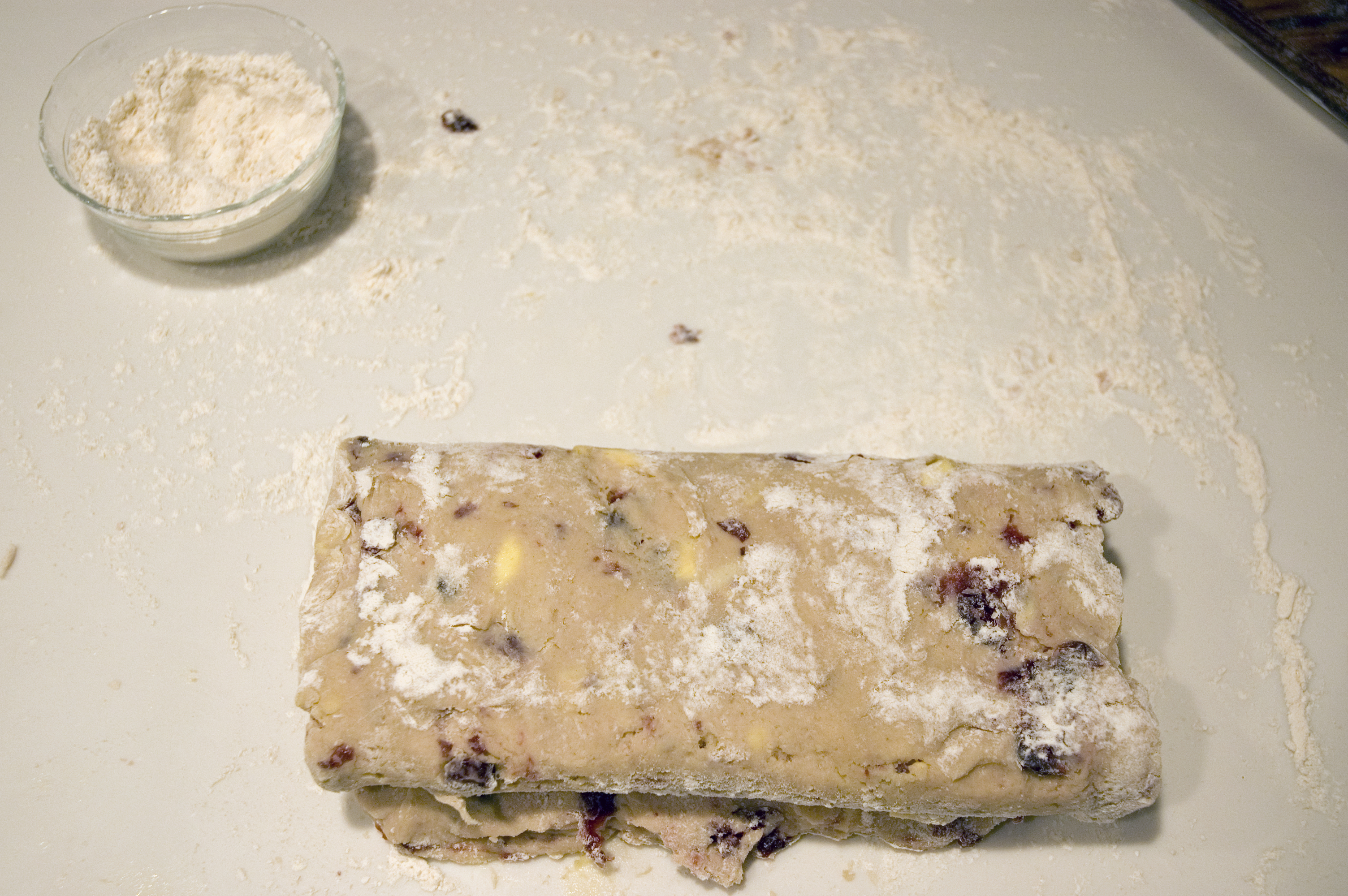
When!
-Rotate dough 90º and roll-out to that same 1/2-to-1-inch thickness (we rotate to keep the dough from continuously widening in one direction as a result of the repeated rolling-out step)
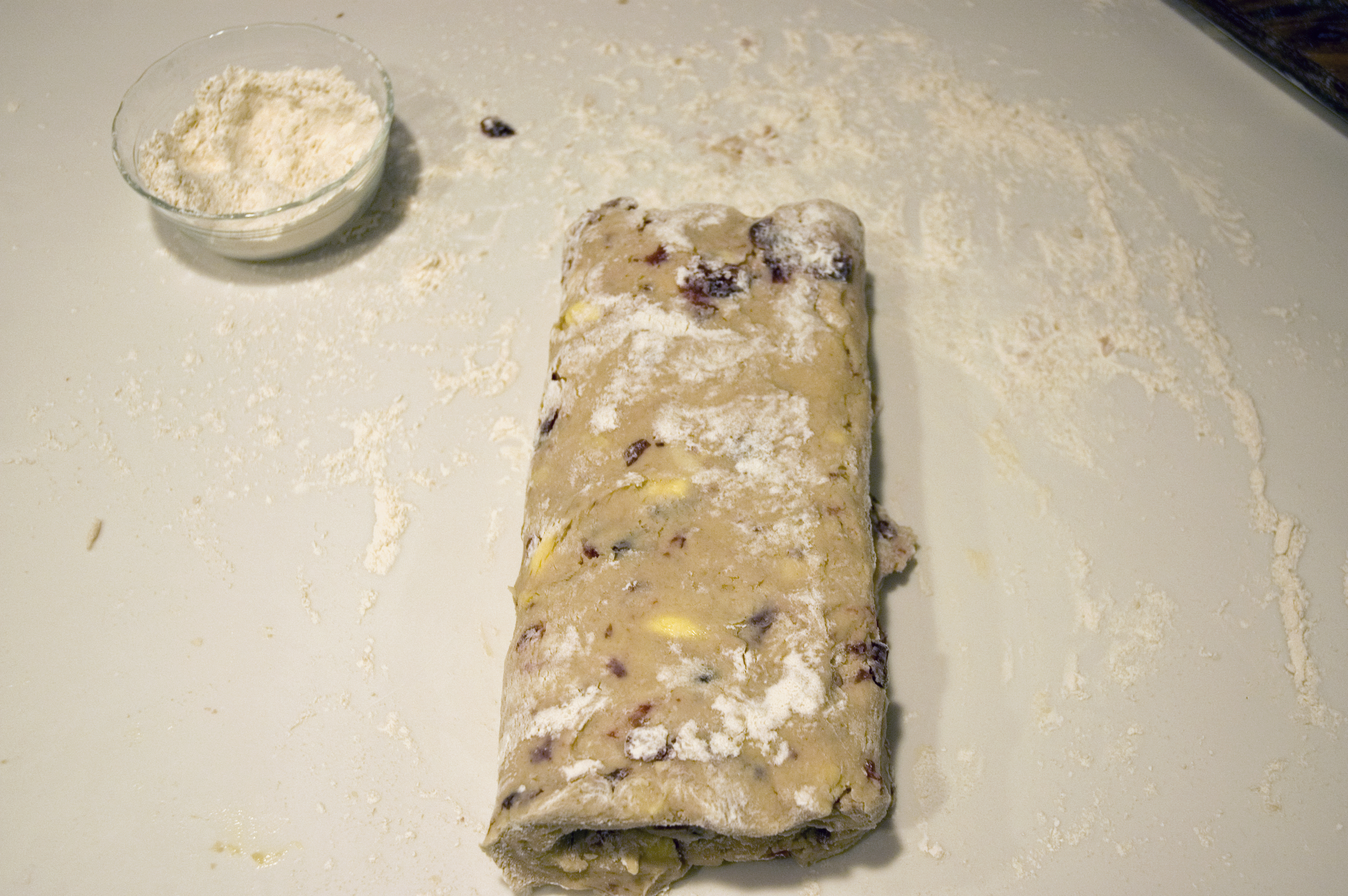
BrRotate.
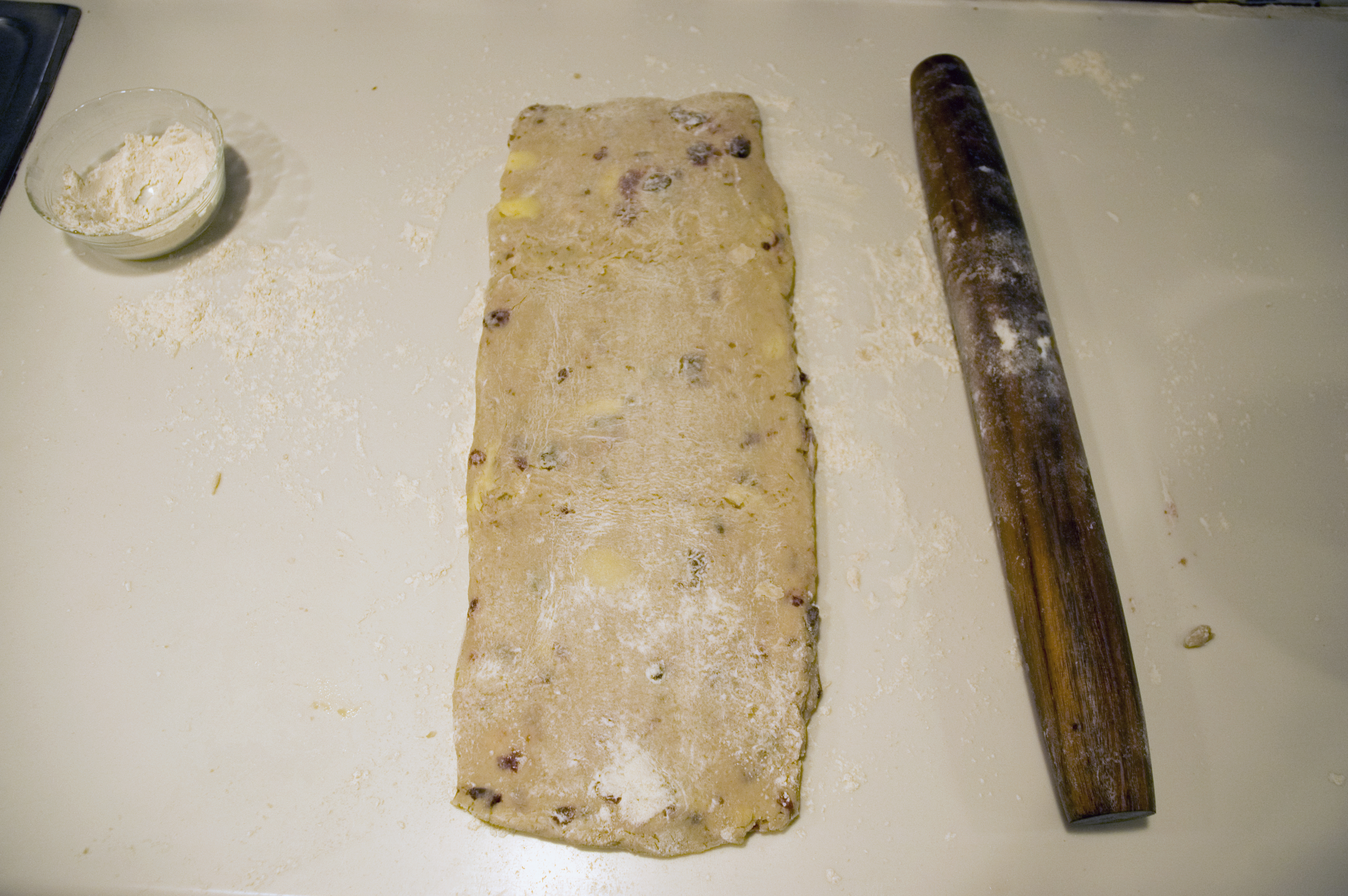
Roll-out!
-Repeat the folding and rolling-out steps 4-6 times (the repeated folding and rolling-out of the dough create hundreds of layers: [number of folds]^[number of turns] that will make this scone especially light!)
On to the recipe!
Layered Scone Recipe
Ingredients:
4 1/4 cups Unbleached all-purpose flour
1/2 cup Sugar
2 teaspoons Baking powder
1/2 teaspoon Baking soda
1/4 teaspoon Salt
2 sticks Butter (cold—salted or unsalted, cut into 6-8 pieces each)
+ 2 tablespoons For melting and brushing atop scones to help sugar stick
2 cups Heavy cream
1 cup Flavored solids of your choice (dried fruits, berries, chocolate, etc.)
to taste Spices to accompany “flavored solids”, like cinnamon
1 plate-full Turbinado/sanding sugar
^press dough into sugar to add a wonderfully sweet crunch to your scone^Instructions
1. Mix powders in a bowl
2. Pinch powder and butter together with fingers to make “flakes”
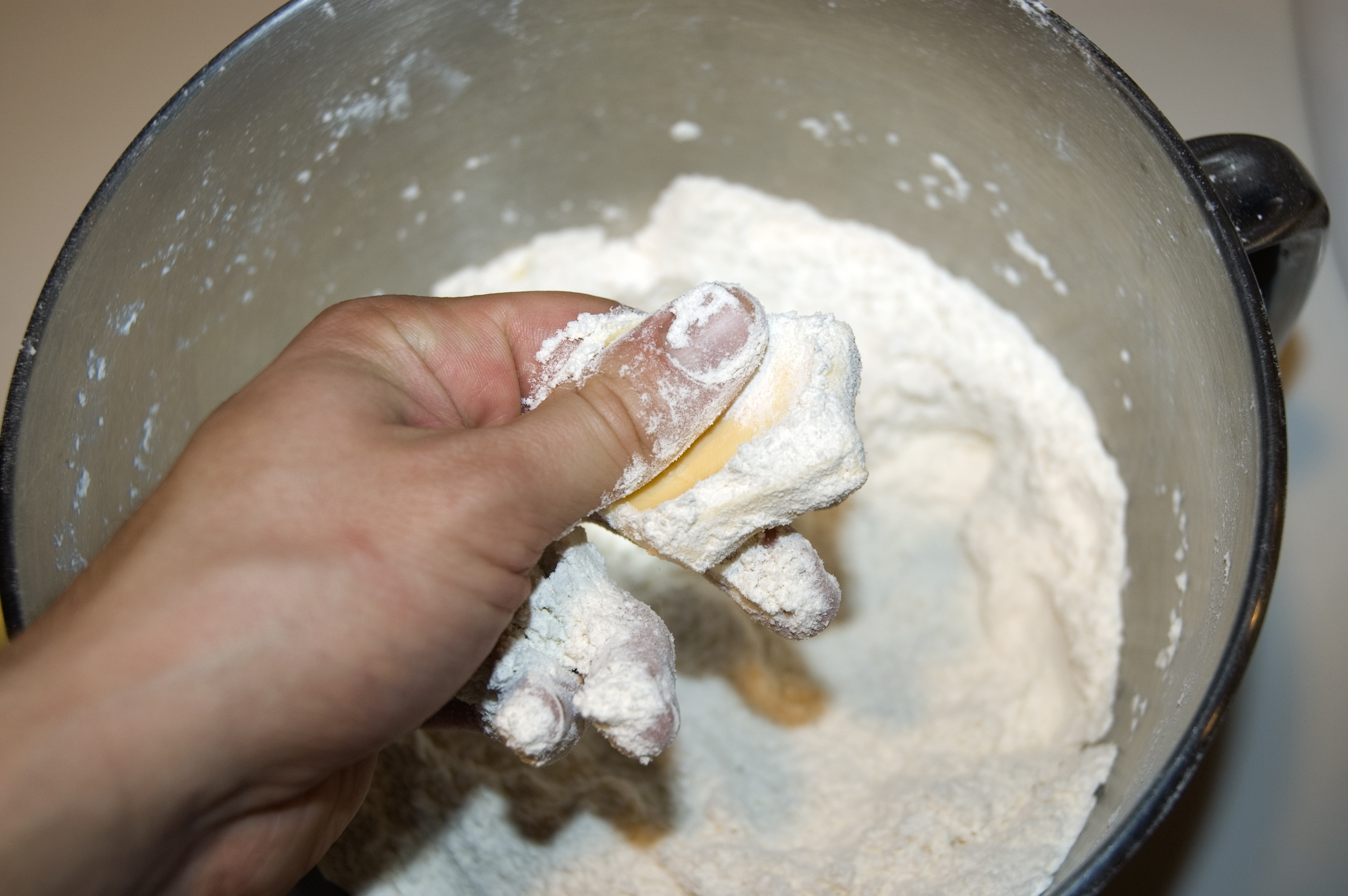
Pinching should yield flakes comparable in size to the range of U.S. coinage.
3. Mix in liquids and flavored solids of your choice
–Refrigerate—about 20 minutes
4. Fold several times to form layers in the dough (see above tutorial)
–Refrigerate—1 hour to 24 hours
5. Cut into triangles
-Brush melted butter over the tops
-Press into turbinado or sanding sugar
–Bake at 350°F until golden-brown!
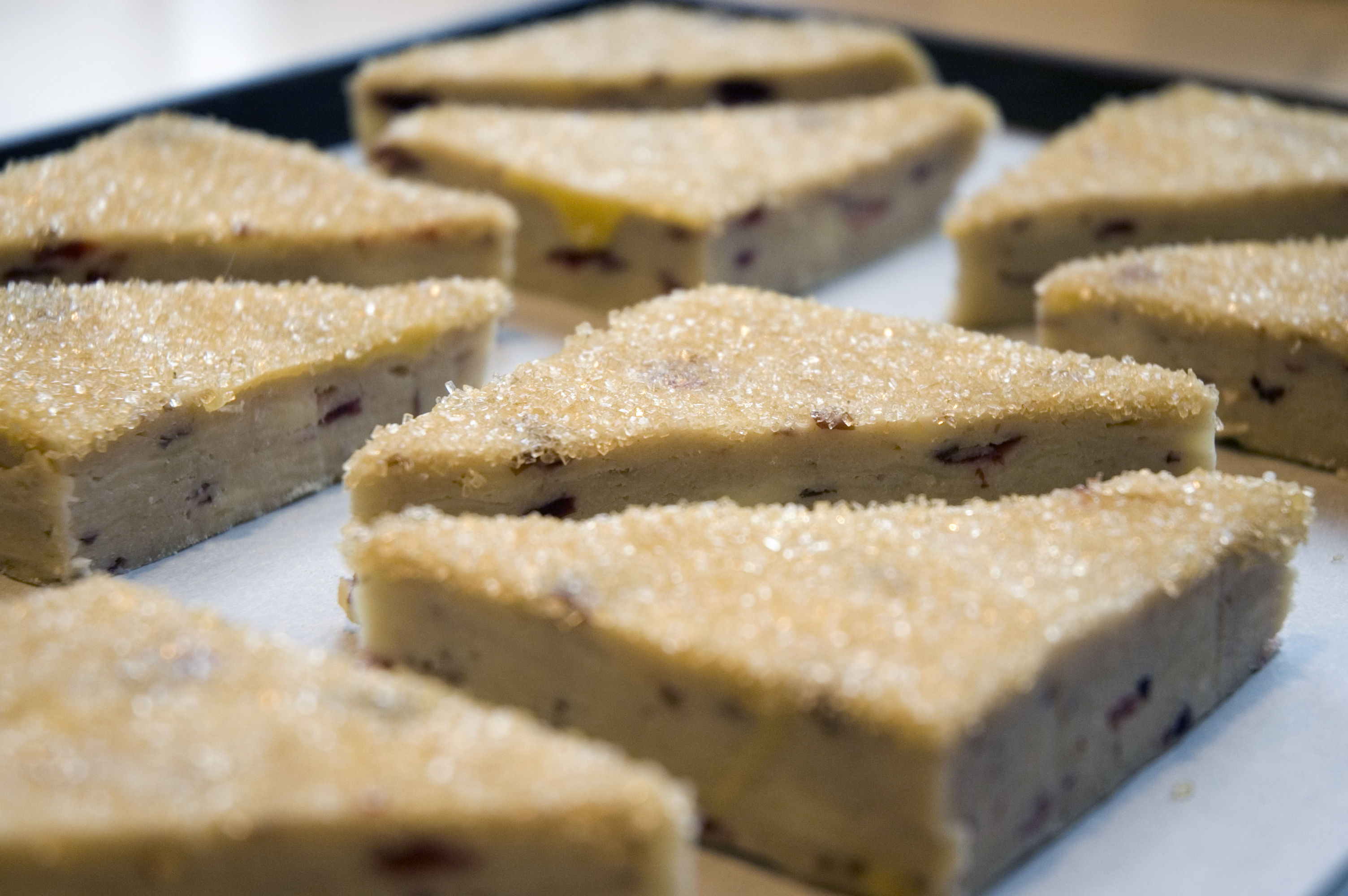
15-25 minutes later . . .
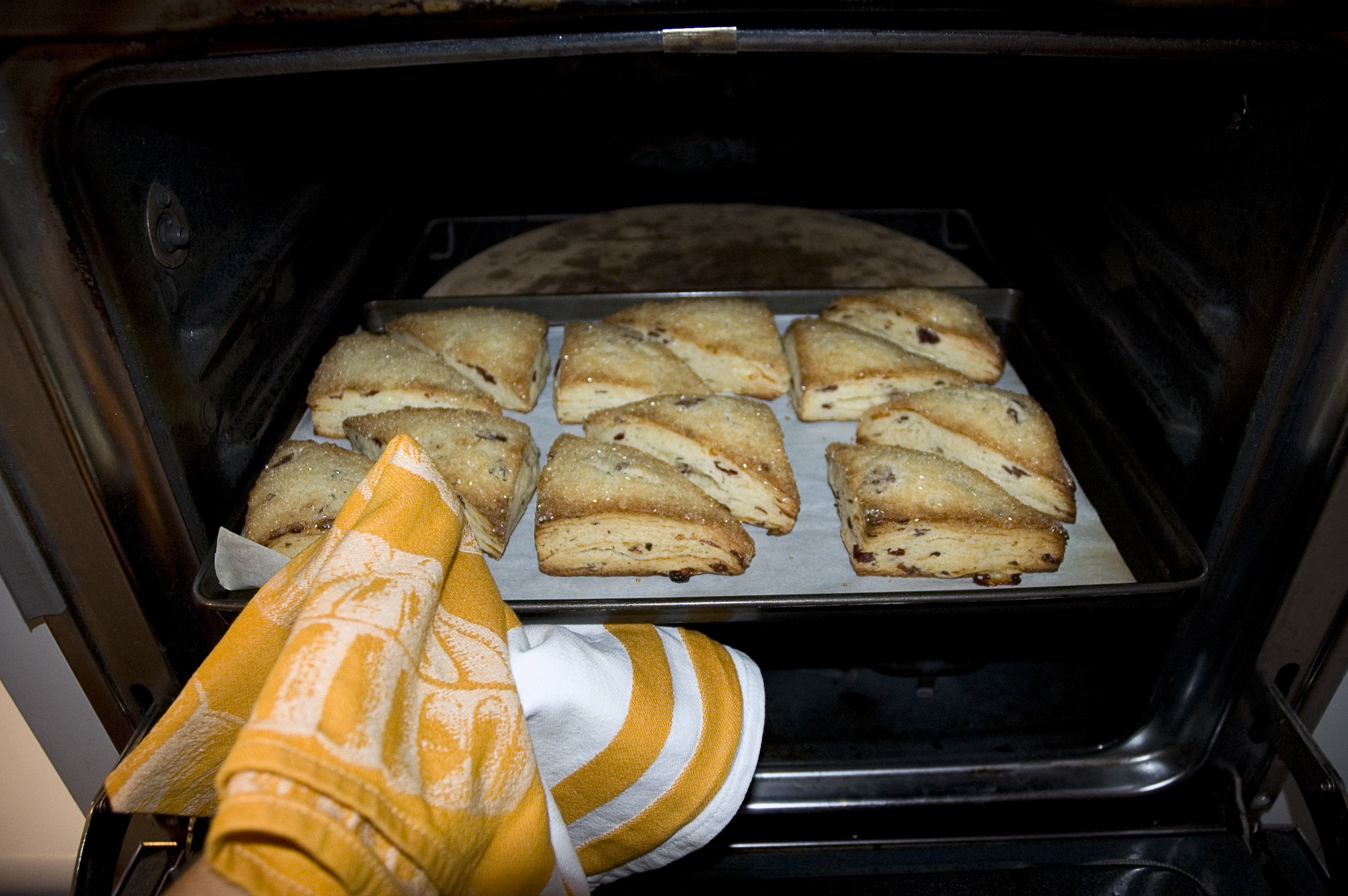
As Charles Chanton once said, “Madame, golden-brown is not a color—it is an art!”
If you don’t mind mere appellation announcing your elite sophistication, and a fair bit of verbosity, then follow this link. The scones will provide the former, we, the latter.
Down the rabbit hole…
 Erubite

One thought on “Layered Scones”